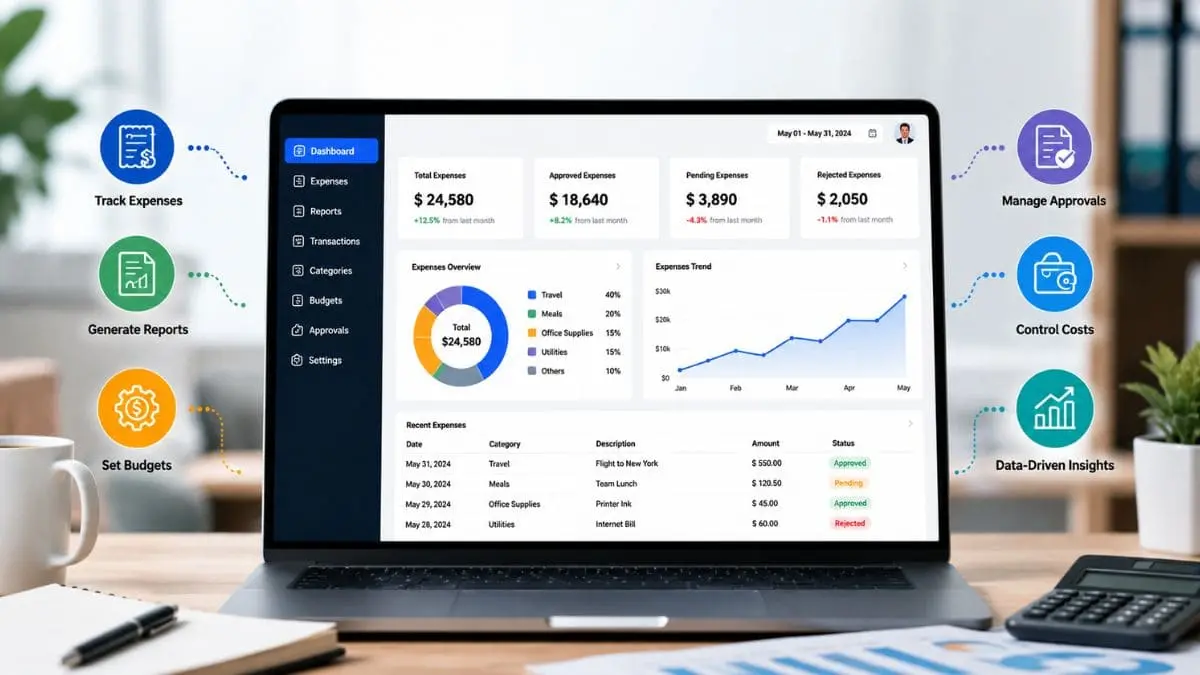
Enterprise Resource Planning (ERP) can completely transform the way a business operates. Choosing the wrong system can result in falling behind for years. The ERP market is experiencing rapid growth. With their assistance, an accountant helps their clients navigate the demands of the global market and the changing expectations of customers. The detailed guide provides information on various types of ERP systems, enabling you to identify the system best suited to your customers’ requirements.
What is Enterprise Resource Planning (ERP)?
Enterprise Resource Planning is software used to manage daily business operations. This includes Enterprise Performance Management, which assists in planning, forecasting, budgeting, and predicting the organization’s financial results. An ERP system facilitates the flow of data by interconnecting business processes. The primary objective of modern ERP systems is to provide advanced intelligence.
A key benefit of ERP is that, through the strategic selection of components, it can be tailored to align with the company’s precise requirements. In addition to accounting functions, ERP systems provide support in human resources, supply chain management, financial management, and manufacturing. ERP systems and software support enterprises, as well as small, large, and medium-sized businesses.
Types of Enterprise Resource Planning (ERP) Systems
Understanding the various types of ERP systems helps in selecting a solution tailored to the customer’s requirements. Each type has its own distinct advantages. Furthermore, a good option always depends on the size of the client’s company and the requirements of their industry. Determine which of the three types of Enterprise Resource Planning systems listed below is the most suitable.
On-Premise ERP
On-Premise ERP is a type of Enterprise Resource Planning software that a company installs on its local servers and hardware. It offers high security, customization, and complete control. Doing this requires a dedicated IT team. On-premise ERP systems are managed within the company itself. This software is most suitable for companies that require strict data security and extensive customization. Additionally, for those who require internal resources to manage complex IT environments.
Cloud ERP
Cloud ERP is an Enterprise Resource Planning software that manages business processes such as human resources, manufacturing, and supply chains through internet-connected servers. It manages business processes such as manufacturing, human resources, finance, and supply chain. Cloud ERP provides companies with the facility to access the software at any time. A cloud-based ERP system is offered as a Service (SaaS). Users can access it from anywhere. This is most suitable for small to medium-sized businesses that require an affordable solution without any investment.
Features of Cloud ERP
These are the features of Cloud ERP.
- Unified core systems
- Accessibility and mobility
- Real-time data and analytics
- Integration
- Automatic updates and maintenance
- Security and compliance
- Disaster recovery
Hybrid ERP
Hybrid ERP systems combine on-premises infrastructure with cloud-based services, allowing companies to retain sensitive data in-house. This allows for leveraging modern and flexible cloud services while keeping core functions within a secure data center. This is ideal for digital modernization. It is also known as Two-Tier ERP. This is most suitable for businesses that need to modernize gradually without completely abandoning their legacy systems. Hybrid ERP can be implemented in several ways, including two-tier ERP and function-specific cloud add-ons.
Benefits of Enterprise Resource Planning (ERP)
The benefits of a well-structured ERP system are as follows-
Cost savings
The greatest benefit of a well-structured ERP system is that it results in cost savings. There is no need to re-enter data across various separate software bundles.
Workflow visibility
Without a proper data system, managers are required to make critical decisions. With the right ERP system, managers receive updates from every area on a single dashboard to facilitate decision-making. Departments performing different functions receive information regarding performance and planning.
Analytics and business intelligence
ERP plays a crucial role in providing reliable data to analysts. They utilize advanced analytics powered by Artificial Intelligence (AI).
Reporting and regulatory compliance
The ERP system automatically provides daily reports regarding changes in legal processes and regulations.
Improved data security
Another benefit of an ERP system is that it maintains strict control over data. It grants separate permissions for entering and reading data. It ensures that current data security and personal privacy comply with the regulations.
Improved cybersecurity
One advantage of an Enterprise Resource Planning (ERP) system is that potential cyberattacks can be anticipated; by identifying these attacks, they can be prevented. They have the capacity to invest beyond the company’s budget.
Choosing the right ERP system
Enterprise Resource Planning is selected to identify the right strategic solution for a business. For this, there must be proof of installations within companies that demonstrate a comparable growth rate. By analyzing business strategy, requirements, and challenges, can be identified. Greater emphasis is placed on cloud-based ERP systems in small, medium, and enterprise companies. The maintenance burden for small organizations is significantly lower. To select the right ERP system, special attention should be paid to its benefits and features.
Key Features of ERP Systems
From a systems perspective, ERP possesses distinct characteristics, comprising a range of financial and operational capabilities. It serves as an aid in managing business operations. The key features of the ERP system are listed below.
- Financial management
- Accounting
- Embedded AI
- Real-time data
- Order processing
- Project management
Conclusion
An ERP system is the most important tool for modern enterprises. They collect data to streamline processes and enhance real-time information. It involves significant investment and complex management requirements. It yields long-term benefits.