In the modern era, the global shift towards development and clean energy has made electric vehicles an indispensable component of fleet operations. Fleet electrification solutions are being rapidly adopted with environmental goals in mind to optimize industrial operational efficiency and reduce carbon emissions. EV fleet solutions incorporate electric vehicles, advanced management systems, and a robust charging infrastructure, thereby enabling businesses to transition either fully or partially away from traditional fuel-based fleets.
This guide discusses the fundamental elements of EV fleet solutions. This includes EV fleet types, EV fleet management software, fleet charging infrastructure solutions, fleet transition planning and implementation, and more.
Understanding EV Fleet Solutions
Before proceeding further in this guide, it is essential to understand what EV Fleet Solutions are.
In general terms, EV fleet solutions refer to the strategies and services designed for the operation and management of electric vehicle fleets. Organizations that adopt electric vehicle solutions aim to keep the environment clean and reduce operational costs.
The components of EV fleet solutions include the installation of EV fleet charging stations for commercial operations, the integration of solutions to electrify the fleet, the adoption of modern software, and key elements of strategies for acquiring and deploying vehicles. Companies utilize these solutions to monitor vehicle performance and estimate expenses. Furthermore, they can maintain a high level of reliability in their operations.
EV Fleet Management Software
EV fleet management software is a digital platform that utilizes AI, IoT, and cloud technology to monitor and optimize electric vehicles. For a successful business, EV fleet operations rely on EV fleet management software, which serves as the backbone. This software manages drivers, charging infrastructure, and energy consumption from a single EV fleet management platform.
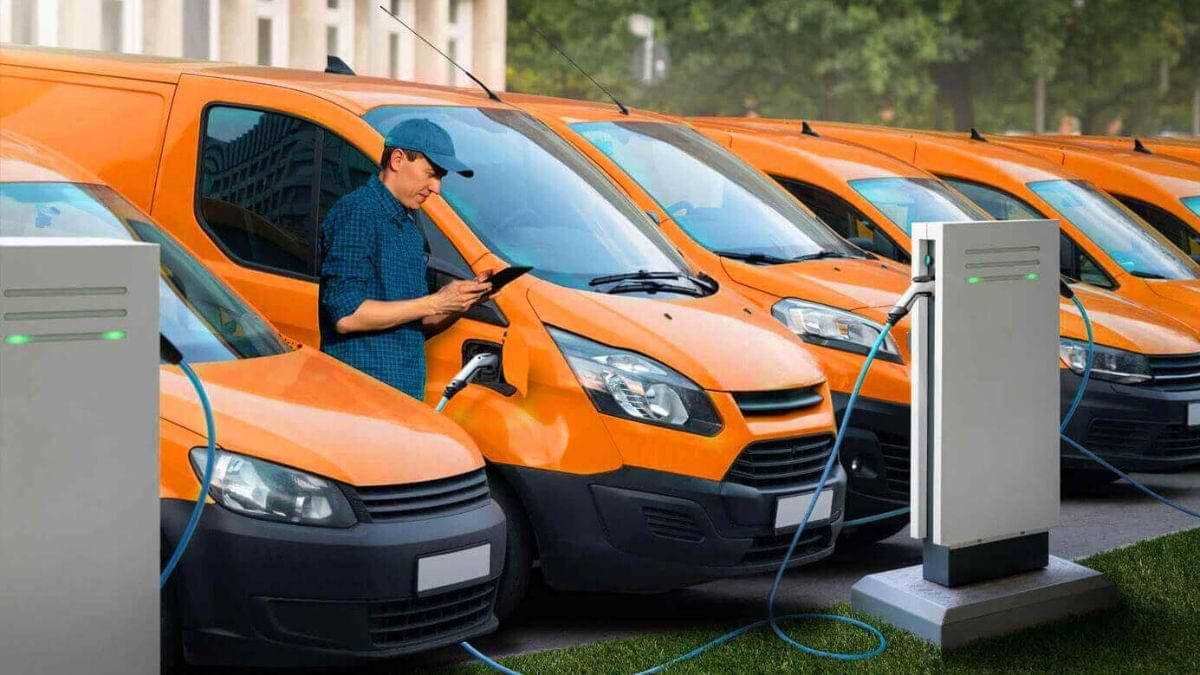
Key features of EV fleet management software
The key features of EV fleet management software are as follows-
Real-Time Vehicle Tracking
A key feature of EV fleet management software is its ability to monitor vehicle location and speed to ensure operational efficiency.
Battery and Energy Management
Battery and energy management are carried out under EV fleet management. This software can easily track the battery, energy consumption, and charging cycles, thereby helping to improve vehicle performance.
Maintenance and Diagnostics
Its greatest benefit is that it plays a significant role in maintenance and diagnostics. These help extend the vehicle’s lifespan, prevent downtime, and reduce operational costs.
Telematics Integration
Integrating telematics facilitates informed decision-making by enabling the collection of data related to driver behavior, energy usage, and vehicle performance.
Reporting and Analytics
They provide key insights by reporting on and analyzing fleet performance, energy usage, carbon footprint, and cost savings.
Fleet Charging Infrastructure Solutions
For the success of an electric vehicle fleet, the presence of charging infrastructure is absolutely essential. Their charging systems are designed in such a way as to ensure that the vehicle charges efficiently and correctly, thereby enabling it to fulfill all operational requirements.
Key aspects of fleet charging infrastructure solutions
The key aspects of fleet charging infrastructure solutions are as follows:
- EV Fleet Charging Stations for Business
- Fast and Ultra-Fast Charging
- Load Management and Energy Optimization
- Integration with Renewable Energy
- Scalable Infrastructure
Benefits of EV Fleet Solutions
Adopting electric vehicle fleet solutions offers a wide range of benefits, making EV fleet solutions a strategic investment for those seeking long-term operational excellence.
- EV Fleet Solutions
- Cost Efficiency
- Sustainability
- Regulatory Compliance
- Operational Efficiency
- Brand Enhancement
- Energy Management
Challenges and Solutions in EV Fleet Management
Organizations face numerous challenges when implementing EV fleet solutions; these challenges and their corresponding solutions are outlined below.
- Range Anxiety
- High Upfront Costs
- Charging Infrastructure Limitations
- Maintenance Expertise
- Data Management
Types of EV Fleets
Understanding the various types of EV fleets is essential for formulating fleet electrification strategies. Fleet vehicles are categorized as follows, based on powertrain technology and operational usage-
BEVs (Battery Electric Vehicles)
BEVs are fully electric vehicles that run on rechargeable batteries. This vehicle is an ideal choice for urban deliveries and short-distance transportation. It produces no emissions of any kind, and its operating costs are low.
PHEVs (Plug-In Hybrid Electric Vehicles)
The second type of vehicle in EV fleets is PHEVs. It is equipped with both a rechargeable battery and an internal combustion engine. PHEVs offer a certain degree of flexibility. This offers a driving convenience for short trips while maintaining a fuel-based range for longer journeys.
HEVs (Hybrid Electric Vehicles)
HEVs are a distinct type of EV that are assisted by an electric motor. They reduce emissions and improve fuel efficiency. HEVs do not require external charging.
Heavy-Duty Evs
Heavy-duty EVs are designed for heavy payloads, long routes, and challenging operational conditions. These include commercial vehicles, electric trucks, and buses. Fleets require charging solutions and route energy optimization to ensure efficiency.
Future of EV Fleet Solutions
As technology evolves, fleet electrification solutions are becoming reliable, affordable, and scalable. This will significantly help in achieving excellent, long-term operational performance in the business. The key trends shaping the future of EV fleet solutions are as follows-
- Advanced Fleet Management Software
- Vehicle-to-Grid Integration
- Expansion of Heavy-Duty EV Fleets
- Renewable Energy Integration
- Autonomous EV Fleets
Planning and Implementing EV Fleet Transition
Transitioning to an EV fleet requires careful strategic planning and monitoring. Outlined below are the steps for planning and implementing an EV fleet transition-
- Fleet Assessment
- Total Cost of Ownership Analysis
- Charging Infrastructure Planning
- Vehicle Procurement Strategy
- Software Deployment
- Driver Training Programs
- Pilot Programs
- Scaling Operations
Top Companies for EV Fleet Solutions
Here are the top companies for EV Fleet Solutions
- Samsara
- Geotab
- ChargePoint
- Verizon Connect
- Ampcontrol
- Motive
Conclusion
EV fleet solutions offer a revolutionary approach that includes EV fleet management software and fleet charging infrastructure. The types of EVs include PHEVs, HEVs, and BEVs. Understanding these types is essential for formulating effective strategies. Their benefits include reduced emissions, an improved brand image, regulatory compliance, and cost reduction.
Well-planned strategies and scalable charging infrastructure ensure effective planning and implementation within the fleet. Challenges such as range anxiety, infrastructure limitations, and high initial costs can be mitigated through integration. Fleet electrification solutions continuously evolve alongside advanced analytics, vehicle-to-grid capabilities, and autonomous vehicles. Organizations that adopt these solutions will be better positioned to achieve long-term growth and operational excellence.