Business intelligence tools have become essential for companies in the US that wish to make better decisions with confidence. To meet this need, Business Intelligence (BI) tools have now become a crucial part of every successful organization. By collecting data using these modern tools and transforming it into useful insights through organization, companies can understand market trends.
Business intelligence tools can identify problems in advance and help formulate better future strategies. As businesses become increasingly reliant on digital systems, the need to transform complex information into a simple and actionable format is growing. BI tools operate highly effectively through simple, clear dashboards and visual reports, enabling teams to make better decisions faster and with greater confidence. Read the article below in full to learn about business intelligence tools.
What Are Business Intelligence Tools?
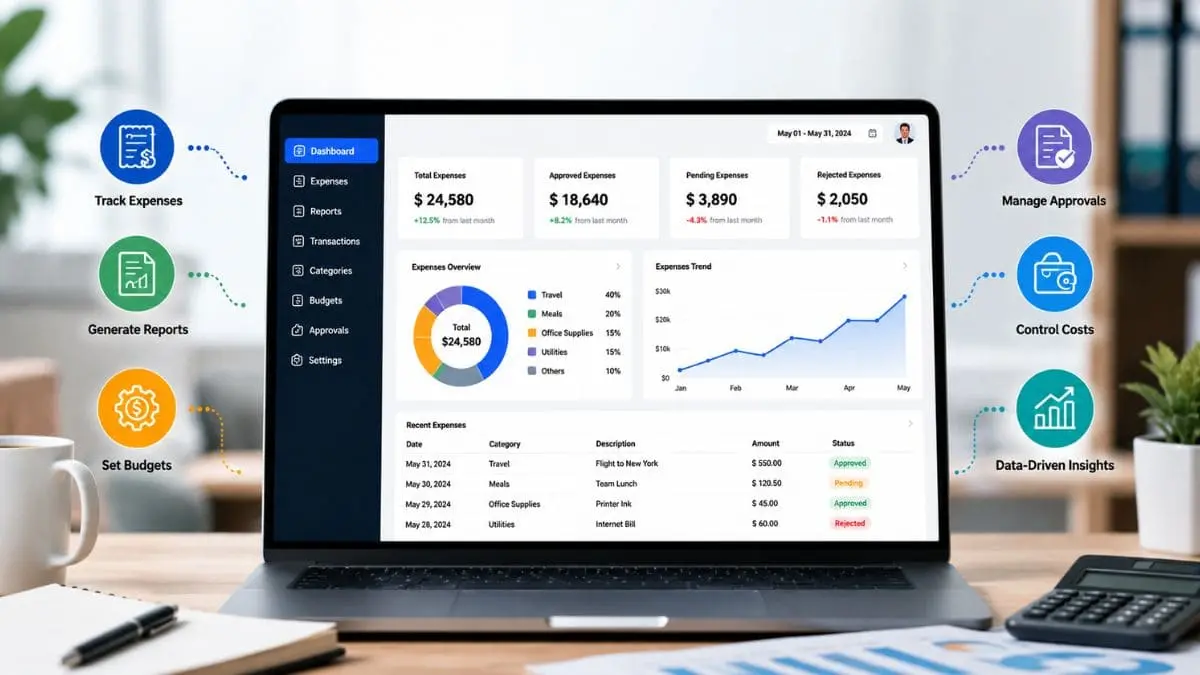
Business intelligence tools are software applications designed to acquire data, analyze it, and generate reports within businesses. With the help of these tools, raw data can be converted into useful data. Additionally, data can be presented in tables, charts, graphs, and dashboards. These tools range from data visualization software to platforms like Oracle BI. With their help, companies can leverage technical coding knowledge, charts, and dashboards to easily generate interactive reports and make data-driven decisions.
Benefits of Using Business Intelligence Tools
The various benefits of business intelligence tools are as follows:
Improving Decision-Making
Business intelligence tools improve decision-making capabilities. These tools provide insights from data analysis.
Enhancing Business Efficiency
By providing a clear picture of business operations, it helps in the better utilization of resources, thereby increasing efficiency.

Predictive Analysis for Future Trends
The biggest advantage of BI tools is that they allow for the forecasting of business trends based on historical data. It helps in formulating strategic plans.
Fostering a Data-Driven Culture
These tools help foster a data-driven culture. Employees become accustomed to using these tools, thereby fostering a culture of data-driven decision-making.
Real-time Insights and Reporting
BI tools provide real-time updates, ensuring a rapid response to market changes.
Enhanced Competitive Edge
In-depth knowledge of business operations and market trends enhances competitive advantage.
What to Look for When Choosing a BI Tool
The need for a business intelligence tool depends on the company’s requirements and its working methods. This tool is the easiest to use and is one of the important factors. An employee might avoid using a tool because of its complexity. A good BI system should be simple and clear, such that even a newcomer can easily understand it. Integration within the selected tool is also important. This tool integrates easily with the company’s existing software, such as customer management platforms and financial databases. Additionally, it is essential for the tool to integrate seamlessly with the company’s existing software and systems.
This makes it easier to make better decisions by viewing the data in one place. Security is also a major issue, so choose a tool that can keep company information secure. Dashboards should be customizable according to needs, and the system should operate quickly. The most important thing is that the BI tool should be able to meet the company’s evolving needs as it grows, thereby avoiding the hassle of repeatedly changing systems.
BI Tools and the Future of Data-Driven Business
In today’s world, companies are rapidly adopting digital technologies; consequently, their importance is also steadily increasing. BI tools help companies understand their data better. They can identify new opportunities and find quick solutions to problems. These tools help adapt to changes in the market. The most important point is that the estimates underlying this decision are based on accurate information and facts. In the near future, BI systems are set to become even smarter.
These will increasingly utilize technologies such as Artificial Intelligence (AI) and automation, enabling the acquisition of more useful information with less effort. Companies that start adopting BI today can gain a significant advantage in staying ahead of their competitors in the future.
The Value of Researching Business Intelligence Tools
Researching business intelligence tools is very important. Detailed information about the BI tools available in the market is available. Specifications and user reviews have been included. These tools present a picture of capabilities and performance under real-world conditions. You can make more informed decisions by studying and comparing the features, prices, and user feedback of BI tools. Which tool is suitable for your business needs?
Types of BI Tools to Consider
There are various types of business intelligence tools, designed based on specific requirements. Some focus on data reporting, while others provide performance summaries and detailed charts.
BI tools are generally of two types-
- A self-service BI platform helps team members explore data without technical assistance.
- Traditional BI systems offer permissions, comprehensive data control, and advanced modeling options for large organizations.
What should you Consider When Choosing a BI tool?
Not all business intelligence tools available in the market are alike; the following differences can be observed among them-
- Ease of use
- Integration capabilities
- Scalability
- Advanced analytics and AI
- Pricing and licensing models
A brief overview of the business intelligence tools used is provided below.
SAP Business Objects Business Intelligence suite
SAP BusinessObjects is a BI platform that provides analytics, reporting, and interactive dashboards. It is used for complex environments involving ERP, CRM, and supply chain systems. This platform is robust, but it is also highly complex and costly.
Strategy
Strategy (formerly MicroStrategy) is an enterprise BI software known for advanced dashboards, advanced data sources, and high-performance analytics features. It plays a crucial role in supporting desktop and mobile access by connecting to multiple data sources.
SAS Augmented Analytics & Business Intelligence
SAS Business Intelligence is software that integrates with predictive analytics. Its BI capabilities include reporting, powerful text analytics, and data integration. It is suitable for organizations that seek analytical insights alongside traditional BI.
Conclusion
Business Intelligence (BI) tools have become an essential tool for modern organizations. They help in making the right decisions by transforming raw data into useful information. As technologies like Artificial Intelligence (AI) and automation continue to evolve. Business intelligence platforms are becoming even more powerful and easily accessible. By carefully evaluating features, scalability, integration capabilities, and security requirements, organizations can select the right BI solution tailored to their needs. Investing in the right business intelligence tool today can help businesses fully leverage their data and achieve long-term growth and success.